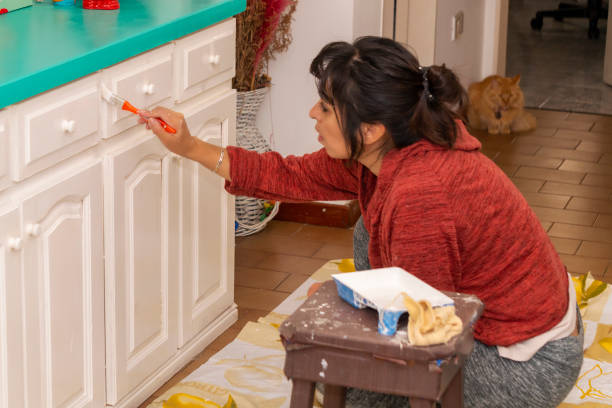
Updating kitchen cabinets can change the appearance of a kitchen without requiring a complete remodel. However, homeowners often have to choose between cabinet painting and refinishing. Although these terms are sometimes used interchangeably, they describe different approaches to updating cabinet surfaces.
The right option depends on several factors, including the cabinet material, existing finish, condition, desired appearance, and how much surface preparation is required. Painting is generally focused on changing the color and creating a new painted surface, while refinishing is often intended to restore or alter the existing wood or finish.
Understanding the difference between these methods can help you determine which approach makes sense for your kitchen. This guide explains cabinet painting vs. refinishing, their advantages and limitations, and the factors to consider before starting the project.
What Is Cabinet Painting?
Cabinet painting involves preparing cabinet surfaces and applying primer and paint to create a new color and finish. The process can be used on many paintable cabinet materials when the surface is properly prepared.
A typical cabinet painting process may include:
- Removing cabinet doors and hardware
- Cleaning surfaces to remove grease, dirt, and residue
- Repairing minor surface imperfections
- Sanding or otherwise preparing the existing finish
- Applying an appropriate primer
- Applying cabinet-grade paint
- Allowing sufficient drying and curing time
- Reinstalling doors and hardware
Preparation is one of the most important parts of the process. Kitchen cabinets are exposed to cooking oils, moisture, fingerprints, and frequent handling, so paint needs a properly prepared surface to adhere effectively.
For homeowners looking to change the color of structurally sound cabinets, painting can be a practical way to create a noticeably different appearance.
What Is Cabinet Refinishing?
Cabinet refinishing generally involves restoring or changing the existing surface finish rather than simply covering it with a new color.
The exact process depends on the material and existing finish. Wood cabinets may be cleaned, sanded, stripped, stained, or coated with a new protective finish. The objective can be to refresh worn surfaces while preserving the natural characteristics of the cabinet material.
Kitchen cabinet refinishing may include:
- Cleaning and degreasing
- Removing an existing finish where necessary
- Sanding the surface
- Repairing minor imperfections
- Applying stain or another finish
- Applying a protective topcoat
- Reinstalling doors and hardware
Refinishing is particularly relevant when homeowners like the appearance of natural wood and want to restore its existing character rather than completely change the cabinet color.
Cabinet Painting vs. Refinishing Key Differences
The biggest difference between the two approaches is the final appearance and how the existing cabinet surface is treated.
Painting covers the existing surface with a new layer of paint. Refinishing generally works with the existing material and may restore, alter, or protect its finish.
| Factor | Cabinet Painting | Cabinet Refinishing |
|---|---|---|
| Main purpose | Change cabinet color and appearance | Restore or update the existing finish |
| Typical appearance | Solid, uniform color | Natural wood or refreshed existing finish |
| Wood grain | Usually covered | Can remain visible |
| Surface preparation | Cleaning, sanding, priming | Cleaning, sanding, stripping, or preparation for new finish |
| Color options | Broad range of paint colors | Usually more dependent on existing material |
| Best suited for | Paintable cabinets in good condition | Wood cabinets where the existing surface can be restored |
| Maintenance | Requires appropriate cleaning | Depends on the new finish |
| Major consideration | Proper adhesion and curing | Compatibility with existing wood and finish |
There is no universal answer as to which option is better. The best cabinet painting approach for one kitchen may not be appropriate for another.
When Is Cabinet Painting the Better Choice?
Cabinet painting may be a good option when the cabinets are structurally sound but the existing color no longer fits the kitchen.
You Want a Different Color
Painting provides significantly more flexibility when changing the cabinet color. A homeowner can move from dark cabinets to lighter colors or choose a completely different color scheme.
For example, outdated brown or dark-painted cabinets may be changed to a lighter neutral shade to create a different visual balance in the kitchen.
The Cabinets Are Structurally Sound
Painting does not solve major structural problems. If doors are warped, cabinet boxes are severely damaged, or hinges cannot be properly secured, painting alone will not correct those issues.
However, cabinets that are solid and functional but have an outdated appearance can often be candidates for painting.
You Prefer a Uniform Appearance
Paint can create a consistent appearance across cabinet doors, drawer fronts, and exposed surfaces. This can be useful when the existing cabinets have inconsistent coloring or visible variations.
You Want More Color Options
One of the major benefits of painting is color flexibility. Paint allows homeowners to select from a wide range of colors rather than being limited to the natural appearance of the existing wood.
When Should You Consider Cabinet Refinishing?
Refinishing can be more appropriate when the existing cabinet material and wood grain are part of the desired appearance.
You Like Natural Wood
If your cabinets are made from attractive wood and you want the grain to remain visible, refinishing may make more sense than painting.
A new stain or protective finish can refresh the surface while maintaining the characteristics of the wood.
The Existing Finish Is Worn
Cabinets can develop scratches, dull areas, fading, or surface wear over time. If the underlying wood remains in good condition, refinishing may provide a way to refresh the surface.
You Want to Preserve the Wood Appearance
Painting creates an opaque surface, while refinishing can preserve or emphasize the natural characteristics of certain wood cabinets.
This distinction is important when deciding between cabinet painting vs refinishing.
Factors to Consider Before Choosing
Choosing between painting and refinishing requires more than comparing colors. Several characteristics of the existing cabinets should be evaluated first.
Cabinet Material
Start by identifying what your cabinets are made from. Solid wood, wood veneer, MDF, laminate, and other materials can respond differently to preparation products, primers, paints, stains, and finishes.
A method that works well on unfinished or previously finished wood may not produce the same result on a laminate surface.
Existing Finish
The existing finish also matters. Cabinets may have paint, stain, varnish, lacquer, or another coating.
The condition and type of the existing finish can affect the preparation required before painting or refinishing.
Condition of the Cabinets
Look closely at doors, drawer fronts, hinges, cabinet boxes, and joints.
Minor scratches and normal wear may be addressed during preparation. Significant water damage, swelling, warping, or structural deterioration may require repair or replacement instead of simply applying a new finish.
Desired Appearance
Think about the final appearance you want.
Choose painting when you want a new solid color or a more uniform appearance. Refinishing may be preferable when you want to retain the appearance of natural wood.
Long-Term Maintenance
Kitchen cabinets are exposed to frequent use. Before selecting a finish, consider how the cabinets will be cleaned and maintained.
Avoid harsh cleaning products unless they are specifically appropriate for the cabinet finish. Routine cleaning with suitable products can help protect the surface over time.
How to Choose the Best Cabinet Painting Approach
If painting appears to be the right option, the next step is determining how the project should be approached.
1. Inspect the Existing Surface
Look for grease, peeling paint, scratches, dents, cracks, and other imperfections. A clean and stable surface is important for a successful coating system.
2. Identify the Cabinet Material
Determine whether the cabinets are wood, MDF, laminate, veneer, or another material. This helps determine which preparation and coating products may be suitable.
3. Consider the Existing Coating
The existing coating may affect adhesion. Simply applying new paint over a glossy or contaminated surface can lead to adhesion problems.
Proper preparation can include cleaning, deglossing, sanding, and priming where appropriate.
4. Choose the Desired Finish
Cabinet paints can provide different levels of sheen and appearance. Consider how the finish will work with the rest of the kitchen, including countertops, walls, flooring, and hardware.
5. Allow Adequate Curing Time
Drying and curing are not necessarily the same thing. A cabinet surface may feel dry before the coating has fully cured.
Following the coating manufacturer’s recommended curing time helps reduce the risk of premature marks, sticking, or damage.
For homeowners comparing the best cabinet painting options, the quality of surface preparation and application is often just as important as the selected color.
Common Mistakes to Avoid
Whether you choose painting or refinishing, avoiding common preparation mistakes can improve the final result.
Painting Over Grease and Dirt
Kitchen cabinets often collect grease around handles, cooking areas, and frequently touched surfaces. Painting over contaminants can interfere with adhesion.
Skipping Surface Preparation
Applying paint without properly preparing the existing surface can result in peeling, uneven coverage, or an inconsistent finish.
Ignoring Existing Damage
Paint can change the appearance of a surface, but it does not automatically repair structural damage. Damaged cabinet doors or boxes should be evaluated before coating.
Choosing an Incompatible Product
Not every paint, primer, stain, or finish is suitable for every cabinet material. Product compatibility should be considered before beginning the project.
Reinstalling Cabinets Too Quickly
Cabinet doors and hardware should not be handled heavily before the coating has had adequate time to dry and cure.
Cabinet Painting vs. Refinishing: Which One Should You Choose?
The decision ultimately depends on what you want to achieve.
Cabinet painting may be the better choice if:
- You want a new cabinet color.
- You prefer a uniform appearance.
- Your cabinets are structurally sound.
- The existing surface is suitable for painting.
- You want more flexibility in color selection.
Refinishing may be the better choice if:
- You want to preserve natural wood grain.
- The existing wood is in good condition.
- The finish is worn but the underlying material remains sound.
- You prefer a stained or natural wood appearance.
- You want to refresh rather than completely change the cabinet appearance.
Before making a decision, evaluate the cabinet material, condition, existing finish, desired appearance, and expected maintenance requirements.
For homeowners in Wichita, Bolden’s Painting Co can be considered when evaluating painting-related needs and determining what type of surface preparation may be appropriate for a cabinet project.
Conclusion
Choosing between cabinet painting and refinishing comes down to the condition of the cabinets and the appearance you want to achieve. Painting is often suitable when you want to change the color and create a consistent painted finish, while refinishing can be useful when you want to restore or preserve the appearance of wood.
Before starting, evaluate the cabinet material, existing finish, surface condition, desired color, and long-term maintenance requirements. Taking these factors into account can help you select the approach that fits your kitchen rather than choosing based only on appearance or cost.
If you need help evaluating your kitchen cabinets or want to discuss painting options, contact us at Bolden’s Painting Co to learn more about the appropriate approach for your project. Bolden’s Painting Co can help you understand the preparation and painting considerations involved before work begins.
Frequently Asked Questions
Is cabinet painting better than refinishing?
Neither option is universally better. Cabinet painting is generally more suitable when the goal is to change the cabinet color, while refinishing can be appropriate when the goal is to restore or update an existing wood finish.
How long does cabinet painting last?
The lifespan of painted cabinets depends on the cabinet material, preparation, coating products, application quality, daily use, cleaning practices, and curing conditions. Proper preparation and maintenance can help preserve the finish.
Can all kitchen cabinets be painted?
Not all cabinet surfaces respond the same way to paint. Wood and many other paintable surfaces can potentially be painted when properly prepared, while laminate and other materials may require specialized preparation and products.
Is cabinet refinishing cheaper than painting?
The cost varies depending on the cabinet material, existing finish, amount of preparation, number of doors and drawers, and selected products. It is better to compare the specific work required rather than assuming one method will always cost less.
Can stained cabinets be painted?
Stained cabinets can often be painted, but the existing stain and protective coating need to be properly prepared. Cleaning, sanding, and priming may be necessary to create a suitable surface for the new coating.
Should I paint or replace my kitchen cabinets?
Painting or refinishing may make sense when the cabinets are structurally sound but visually outdated. Replacement may be more appropriate when cabinets have significant structural damage, water damage, severe deterioration, or a layout that no longer works for the kitchen.
Does cabinet refinishing change the color?
It can. Depending on the material and process, refinishing may involve applying a new stain or finish. However, the range of possible results depends heavily on the existing wood and finish.
What is the most important part of cabinet painting?
Surface preparation is one of the most important parts. Cleaning, repairing, sanding, and priming when appropriate can help create a suitable foundation for the paint.