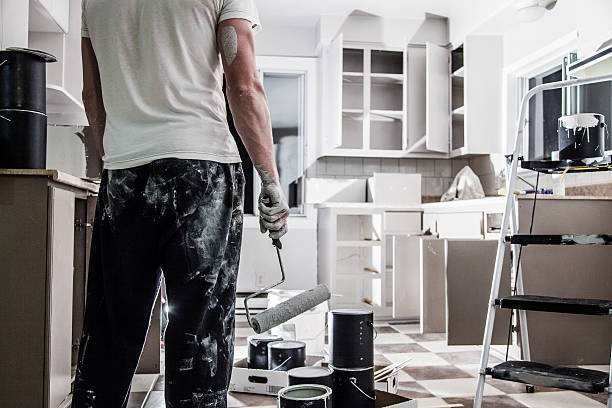
Old or peeling paint can make kitchen cabinets look worn, uneven, or difficult to maintain. If you are planning to repaint or refinish your cabinets, removing some or all of the existing coating may be necessary. However, kitchen cabinets require more care than many other painted surfaces because excessive scraping, harsh chemicals, or aggressive sanding can damage the wood, veneer, laminate, or existing finish underneath.
Knowing how to remove paint from kitchen cabinets safely starts with identifying the cabinet material, understanding the type of existing paint, and choosing a removal method that does not unnecessarily damage the surface.
For many projects, complete paint removal may not even be necessary. If the existing coating is firmly attached and the surface can be properly cleaned, sanded, repaired, and primed, a new finish may be applied without stripping the cabinets down to bare material.
Can You Remove Paint from Kitchen Cabinets?
Yes, you can remove paint from kitchen cabinets, but the appropriate method depends on the cabinet material, existing finish, number of paint layers, and condition of the surface.
Wood cabinets may tolerate carefully controlled scraping, chemical stripping, and sanding. Veneer requires more caution because the thin wood layer can be damaged by aggressive sanding. Laminate and manufactured cabinet surfaces may require a different preparation process altogether.
Before beginning, inspect a small hidden area of the cabinet. This test can help determine whether the paint softens with a stripper, lifts easily with a scraper, or requires controlled sanding.
The goal is not simply to remove as much paint as possible. The goal is to create a clean, stable surface that can be properly prepared for the next finish.
What You Need Before Removing Paint
Gather your materials before starting the project. Having the right equipment makes the process more controlled and reduces the temptation to use excessive force.
| Item | Purpose |
|---|---|
| Screwdriver or drill | Removing doors, drawers, and hardware |
| Painter’s tape | Protecting surrounding surfaces |
| Drop cloths | Protecting floors and countertops |
| Cleaning solution | Removing grease and kitchen residue |
| Protective gloves | Protecting hands from chemicals and debris |
| Safety glasses | Protecting eyes during scraping and sanding |
| Respirator or appropriate mask | Reducing exposure to dust or product fumes |
| Plastic scraper | Lifting softened paint |
| Paint stripper | Softening compatible paint layers |
| Sandpaper | Smoothing remaining coating and preparing surfaces |
| Sanding block or orbital sander | Controlled surface preparation |
| Clean cloths | Removing residue and dust |
Always follow the manufacturer’s instructions and safety information for any chemical paint remover. Provide adequate ventilation and keep children and pets away from the work area.
How to Remove Paint from Kitchen Cabinets Safely
1. Remove Cabinet Doors, Drawers, and Hardware
Start by removing cabinet doors and drawers whenever possible. Label each door and its hardware so everything can be returned to its original location.
Working with doors on a flat, protected surface makes it easier to inspect the paint and apply a controlled removal technique. It also reduces the likelihood of accidentally damaging nearby walls, countertops, or appliances.
Remove knobs, pulls, hinges, and other hardware before beginning the paint removal process. Store small hardware pieces in labeled bags or containers.
For fixed cabinet boxes, protect adjacent countertops, flooring, walls, and appliances with drop cloths and appropriate coverings.
2. Clean and Degrease the Cabinets
Kitchen cabinets are exposed to cooking oils, grease, food residue, and cleaning products. These contaminants can interfere with paint removal and can also prevent new primer or paint from bonding properly.
Clean the cabinet surface thoroughly before attempting to strip or sand the coating.
Allow the cabinets to dry completely before moving to the next step. Working on a dirty or damp surface can make the process less effective and may spread residue across areas that have already been cleaned.
3. Identify the Cabinet Material and Existing Finish
This is one of the most important steps when you want to remove paint from kitchen cabinets.
Determine whether the cabinets are:
- Solid wood
- Wood veneer
- MDF
- Medium-density fiberboard with a painted coating
- Laminate
- Another manufactured material
If you are unsure, inspect an unfinished edge or an inconspicuous area.
The same paint removal technique should not automatically be used on every cabinet. For example, aggressive sanding that may be acceptable on solid wood could cut through veneer. Similarly, chemical stripping products should only be used when they are compatible with the cabinet surface and existing coating.
4. Test a Small Area
Before treating an entire cabinet, test your selected method in a small, hidden area.
Apply the product or technique according to its instructions and observe what happens.
Look for:
- Whether the paint softens
- Whether the coating lifts cleanly
- Whether the underlying material changes color
- Whether the surface becomes sticky
- Whether the veneer or substrate begins to deteriorate
If the test produces unexpected damage, stop and choose a different preparation method.
A small test can prevent an expensive mistake across an entire kitchen.
5. Choose the Right Paint Removal Method
There are several ways to remove paint from kitchen cabinets. The best choice depends on the cabinet material and coating.
Chemical Paint Stripping
A suitable paint stripper can soften multiple layers of paint, making them easier to remove with a scraper.
Apply the product only as directed by the manufacturer. Allow it to work for the recommended period rather than leaving it on indefinitely.
Once the paint has softened, use a plastic scraper to lift the coating. Avoid excessive pressure that could gouge the cabinet surface.
Chemical stripping can be useful when cabinets have several layers of old paint that would otherwise require extensive sanding.
Manual Scraping
A scraper can remove loose, peeling, or softened paint. It is particularly useful after applying a compatible stripping product.
Use controlled movements rather than forcing the scraper into the cabinet surface. A sharp metal scraper can cause deep scratches or gouges if used aggressively.
A plastic scraper is often a safer option for delicate surfaces.
Sanding
Sanding can remove remaining paint and smooth the cabinet surface after the bulk of the coating has been removed.
Start with a suitable grit for the condition of the surface and progress to finer paper as needed. Avoid excessive sanding in one location because heat and friction can damage some materials.
For veneer cabinets, use extra care. Sand only enough to prepare the surface rather than attempting to remove every trace of coating.
6. Remove the Softened Paint Carefully
After the paint has been softened, carefully scrape it from the cabinet.
Work in manageable sections. Keep the scraper relatively flat against the surface and use controlled pressure.
Do not rush this stage. If the paint is difficult to remove, it may need additional dwell time according to the stripper manufacturer’s instructions rather than more scraping pressure.
The objective is to remove the coating without damaging the material underneath.
7. Sand Remaining Paint and Smooth the Surface
Once most of the old coating has been removed, lightly sand areas that still have paint residue or uneven transitions.
Sanding can also help smooth minor imperfections before priming.
Avoid trying to make every cabinet completely bare if doing so would require excessive sanding. In many repainting projects, the important objective is a clean, stable, properly prepared surface rather than complete removal of every microscopic trace of the previous coating.
After sanding, remove all dust with a suitable cleaning method and allow the surface to become completely clean and dry.
8. Inspect the Cabinets Before Applying New Paint
Take time to inspect the cabinet doors and boxes after paint removal.
Look for:
- Cracks
- Gouges
- Chipped edges
- Loose veneer
- Water damage
- Remaining grease
- Peeling areas
- Uneven surfaces
Repair appropriate imperfections before priming.
This inspection is important because painting over damaged or unstable material will not solve the underlying problem. Proper preparation is what helps create a smooth and durable finished surface.
Which Paint Removal Method Should You Use?
There is no single method that works for every kitchen cabinet.
| Cabinet Condition | Potential Approach | Main Consideration |
|---|---|---|
| Loose or peeling paint | Controlled scraping | Avoid gouging the surface |
| One thin paint layer | Light sanding and preparation | Complete stripping may not be necessary |
| Multiple paint layers | Compatible chemical stripper and scraping | Follow product safety instructions |
| Solid wood | Stripping and controlled sanding | Protect the wood underneath |
| Wood veneer | Very light sanding and careful preparation | Avoid sanding through the veneer |
| Laminate | Manufacturer-compatible preparation | Avoid aggressive stripping or sanding |
| Damaged cabinets | Repair followed by preparation | Address structural or surface issues first |
The right approach should always be based on the actual cabinet material rather than simply the number of paint layers.
How to Avoid Damaging Kitchen Cabinets
The most common mistakes occur when homeowners try to speed up the process.
Avoid these practices:
Do Not Use Excessive Force
If paint is not coming off, increasing pressure is not always the answer. You could damage wood, veneer, or the substrate beneath the coating.
Do Not Skip Cleaning
Grease and residue can interfere with both paint removal and future refinishing. A clean surface gives you a better starting point.
Do Not Sand Too Aggressively
Heavy sanding can change the shape of cabinet edges and profiles. It can also expose veneer or damage engineered materials.
Do Not Ignore Ventilation
Some paint removers release strong vapors. Follow the product’s ventilation and personal protective equipment requirements.
Do Not Mix Chemical Products
Never combine paint removers, cleaners, or other chemicals unless the product manufacturer specifically states that they are compatible.
Do Not Assume Every Cabinet Can Be Stripped
Some cabinets are better candidates for surface preparation and repainting than complete paint removal. If the existing coating is stable, stripping it unnecessarily can create more work and increase the risk of damage.
When Should You Avoid DIY Paint Removal?
DIY preparation can be reasonable for a small project when you understand the cabinet material and have the appropriate equipment. However, professional help may be appropriate when the project involves extensive paint buildup, delicate veneer, damaged cabinets, large kitchens, or uncertainty about the existing coating.
Older painted surfaces may also require additional consideration. If you suspect the cabinets have very old paint, especially in a property where lead-based paint may be present, do not begin aggressive sanding or scraping without understanding the applicable safety requirements.
A professional can also evaluate whether complete paint removal is actually necessary. In some cases, careful cleaning, sanding, repair, bonding primer, and a compatible finish can provide a better approach than stripping the cabinets to bare material.
What to Do After Removing the Paint
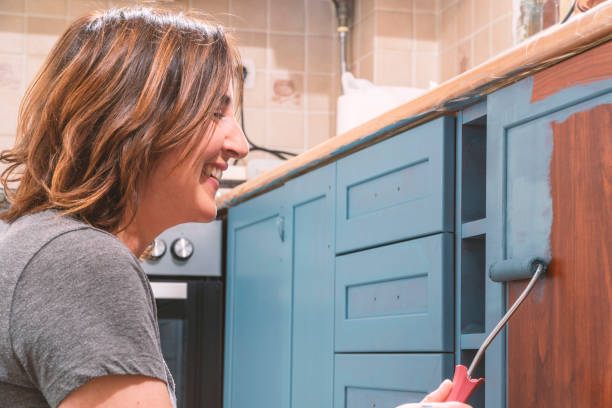
Paint removal is only one stage of a cabinet refinishing project.
After the old coating has been removed or sufficiently prepared, the next steps typically include:
- Clean the surface thoroughly.
- Repair dents, cracks, or damaged areas.
- Sand appropriate surfaces.
- Remove sanding dust.
- Apply a compatible primer.
- Allow the primer to cure according to its instructions.
- Apply the selected cabinet coating.
- Allow adequate drying and curing time.
- Reinstall doors, drawers, and hardware carefully.
Primer selection is particularly important when the cabinet material or previous coating creates adhesion challenges. The surface should be clean, dry, sound, and properly prepared before the new finish is applied.
Can You Repaint Cabinets After Removing Old Paint?
Yes. Repainting is one of the common reasons homeowners remove or prepare old cabinet paint.
However, complete paint removal is not always required before repainting. If the existing coating is firmly attached, it may be possible to clean, scuff-sand, repair, prime, and repaint the cabinets.
The decision depends on the condition of the existing finish.
If paint is peeling, cracking, bubbling, or separating from the surface, those problems should be addressed before applying a new coating. Simply covering unstable paint can lead to the new finish failing along with the old layer.
Professional Cabinet Refinishing and Painting
For homeowners who do not want to handle the preparation themselves, professional cabinet refinishing can provide another option.
Bolden’s Painting Co. offers cabinet refinishing for kitchen, bathroom, and built-in cabinets. Its listed process includes removing and labeling doors and drawers, deep cleaning and degreasing, sanding and filling imperfections, applying primers and bonding agents, and using sprayed or brushed finishes depending on the project and cabinet material.
Bolden’s Painting Co. is a family-owned painting company serving Wichita and surrounding communities, with residential and commercial painting services in addition to cabinet refinishing. The company states that it has more than 30 years of experience and uses a prep-first approach to painting and restoration work.
For homeowners considering cabinet refinishing, the key question is whether the cabinets need complete paint removal or simply thorough preparation for a new finish. A professional evaluation can help determine the appropriate approach based on the cabinet material and condition.
Conclusion
Learning how to remove paint from kitchen cabinets safely is mainly about preparation, patience, and choosing a method that matches the cabinet material. Start by cleaning and inspecting the surface, test your chosen technique in a small area, and avoid aggressive scraping or sanding that could damage the cabinet underneath.
Complete paint removal is not always necessary. In many cases, properly preparing a stable existing finish can be more practical than stripping every layer. When cabinets have extensive paint buildup, delicate veneer, damaged surfaces, or an uncertain finish, professional evaluation may be the safer option.
If you are planning a cabinet update in Wichita or the surrounding area, you can contact Bolden’s Painting Co. to discuss cabinet refinishing and painting options. The company provides residential interior painting and cabinet refinishing services as part of its broader painting services.
Frequently Asked Questions
What is the easiest way to remove paint from kitchen cabinets?
The easiest method depends on the cabinet material and paint condition. Loose paint may be removed with controlled scraping, while multiple layers may require a compatible paint stripper followed by careful scraping and sanding.
Do I have to remove all the old paint before repainting cabinets?
No. Complete paint removal is not always necessary. If the existing paint is firmly bonded, cleaning, light sanding, repairs, and proper priming may be enough to prepare the cabinets for repainting.
Can I use a heat gun to remove cabinet paint?
A heat gun can soften some types of paint, but it requires caution around wood, veneer, adhesives, and other cabinet materials. Excessive heat can damage surfaces or create a fire hazard. Use only a method appropriate for the cabinet material and follow safety instructions.
Can you remove paint from wood kitchen cabinets without damaging the wood?
Yes, but careful technique is important. Avoid excessive scraping and aggressive sanding. Test the removal method on an inconspicuous area first and use controlled pressure.
How do you remove paint from cabinets without sanding?
A compatible chemical paint stripper can soften certain paint coatings, allowing them to be scraped away. However, some light sanding may still be useful for smoothing the surface and preparing it for primer and new paint.
Should I strip cabinets before painting them?
Not always. Stripping may be appropriate when there are multiple failing paint layers or an incompatible finish. If the existing coating is sound, thorough cleaning, surface preparation, and priming may be sufficient.
What should I do after removing paint from cabinets?
Clean the surface, repair imperfections, lightly sand where appropriate, remove dust, apply a compatible primer, and then apply the selected cabinet finish according to the coating manufacturer’s instructions.
Is cabinet refinishing better than replacing cabinets?
It depends on the condition and layout of the cabinets. Refinishing can be an option when the existing cabinets are structurally sound and the goal is to update their appearance without replacing the entire cabinet system. Bolden’s Painting Co. describes cabinet refinishing as an alternative to replacement for suitable kitchen, bathroom, and built-in cabinets.